





Kokedama Care Guide
Caring for your Kokedama is simple once you understand its rhythm. Follow these easy steps to help your Kokedama thrive.
Tropical
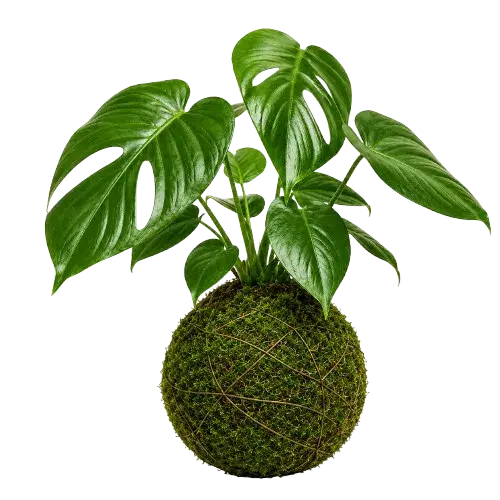
Tropical kokedama is the easygoing one, happy in bright indirect light with a weekly soak, rewarding a little attention with lush, trailing growth.
Succulent
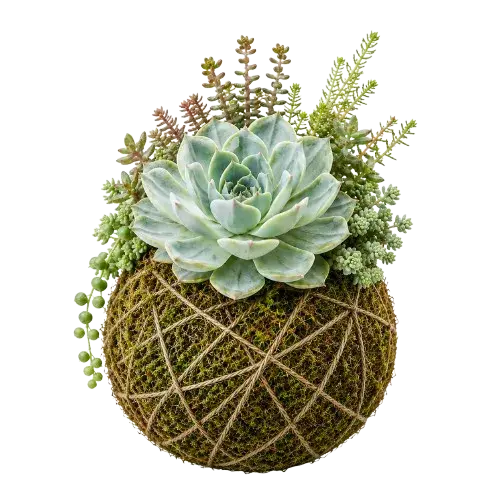
Succulent kokedama is the independent one, built for bright light and long stretches of neglect, asking only for a sunny spot and patience to dry fully between drinks.
Fern
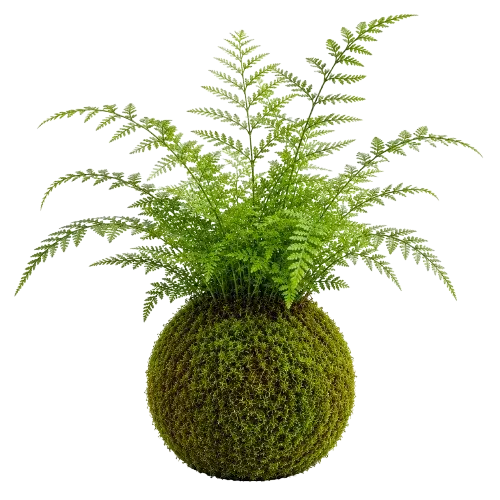
Fern kokedama loves moisture and shade, thriving in humid, low-light corners where its delicate fronds stay damp, perfect for a bright bathroom or kitchen.
Watering Basics

Ferns and Tropicals: Water by Weight, Not by Calendar
The single best way to know when to water is to lift the ball.
- Light and dry means it is thirsty. Time to water.
- Heavy and damp means there is still moisture in the core. Wait.
Succulents: Succulents don’t require the same amount of water as ferns or tropicals.
- A light ball is the starting point, not a cue to water.
- Let it stay dry for several more days, then watch the plant instead.
- Soak only when the leaves look slightly puckered.
Tropical Kokedama
These are the most forgiving and the best place to start. The goal is a core that stays lightly moist but never waterlogged.
- Water: Soak when the ball feels light, roughly once a week. Expect more often in summer or dry rooms, less in winter.
- Light: Bright, indirect light. An interior spot near a window with no harsh direct sun is ideal. Direct midday sun will scorch the leaves.
- Humidity: They enjoy it. Mist a few times a week, or group plants together to raise the local humidity.
- Watch for: Yellowing, mushy leaves mean too much water. Crispy edges and a very light ball mean too little.
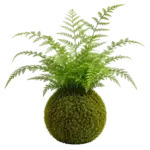
Ferns Kokedama
Ferns are the thirstiest. The core should stay consistently damp and should never dry out completely.
- Water: Soak often, roughly every 4 to 6 days, and do not let the ball go fully light. If the fronds start crisping, you have waited too long.
- Light: Lower, indirect light. Ferns evolved on shaded forest floors, so they dislike bright or direct sun.
- Humidity: High. This is the make-or-break factor for ferns indoors. Mist daily, keep them away from heating vents and dry drafts, and a bathroom with a window is often a perfect home.
- Watch for: Brown, brittle fronds signal dry air or a dry core. Consistent moisture and humidity fix most fern problems.
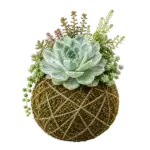
Succulent Kokedama
Succulents need the opposite rhythm from ferns. They store their own water and rot if the roots stay wet, so the core must dry out fully between waterings. Because moss naturally holds moisture, succulent kokedama rewards restraint. When in doubt, wait another few days.
- Water: Soak only when the ball is completely dry and light, roughly every 2 to 3 weeks, and even less in winter when growth slows. Underwatering is far safer than overwatering here.
- Light: The brightest spot you have. Succulents want plenty of light and tolerate some direct sun once acclimated.
- Humidity: Low. Do not mist. Good airflow around the ball helps it dry and keeps rot away.
- Watch for: Soft, translucent, or mushy leaves mean overwatering, so let it dry out longer. Shriveled, puckered leaves mean it is finally ready for a drink.

During the growing season, spring through early autumn, add a diluted liquid fertilizer to the soak water about once a month. Use roughly half the strength listed on the bottle. Skip feeding in winter when growth naturally slows. Succulents need even less, so feed them just two or three times across the whole growing season.
A kokedama on a dish or tray holds moisture a little longer and is the easier starting point. A hanging kokedama exposes more of the ball to air, so it dries faster and needs water more often. Either way, never leave the ball sitting in a pool of water, since standing water is the fastest route to root rot. Empty the dish after watering.

A kokedama on a dish or tray holds moisture a little longer and is the easier starting point. A hanging kokedama exposes more of the ball to air, so it dries faster and needs water more often. Either way, never leave the ball sitting in a pool of water, since standing water is the fastest route to root rot. Empty the dish after watering.
Reading the Signs
- Yellow, soft, mushy leaves: too much water. Let the ball dry further before the next soak.
- Crispy, brown, wilting leaves with a very light ball: too little water. Soak now and check the weight more often.
- Pale, leggy, stretched growth: not enough light. Move to a brighter spot.
- Scorched or bleached patches: too much direct sun. Move back from the window.

A healthy kokedama lasts two to three years before the plant outgrows its ball. When roots begin to push through the moss and the plant looks crowded, you can refresh it: gently unwrap the outer layer, add fresh soil and moss around the root ball, and rebind with string. The plant carries on, and you have given it a second life.