

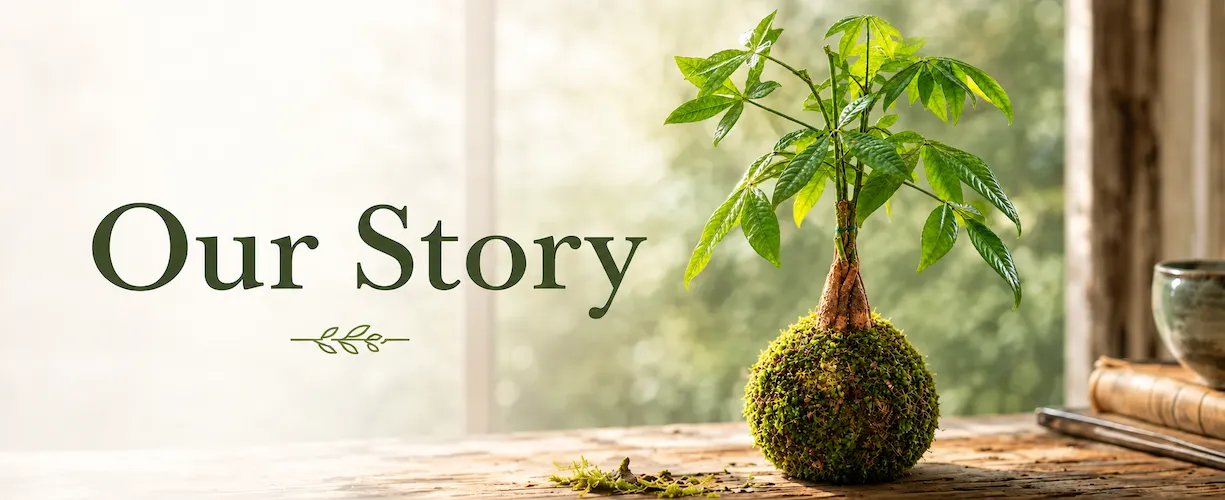

It started with a single moss ball on a windowsill. I discovered kokedama the way most people do, by accident, and got quietly hooked on the idea of a plant that needs no pot, just roots, soil, and a moss wrapping. It looked like something between a garden and a sculpture, and I loved it.

So, I tried making one. The first attempt was rough and lopsided, but the second was better, and somewhere around the tenth, my hands started to know what to do. That’s the thing about Kokedama. It rewards patience and beauty, and it teaches you as you go.
What kept me going was the making itself. There’s something steadying about shaping each ball by hand, packing the soil, binding the moss, and knowing no two will ever be the same. It’s purposeful, tactile work in a world that rushes everything, and I loved that. Every piece carries small differences, the lean of a stem, the texture of the moss, the way the roots settle in, and I’ve come to see those differences as the whole point.

Before long, my friends wanted one. Then friends of friends. What began as hobby grew into Aura Kokedama, where every Kokedama is still made by hand, one at a time. Nothing here comes off an assembly line. Each one is wrapped, checked, and cared for until it’s ready to go live in someone else’s home.

That’s still how I do it today, and I can’t imagine doing it any other way.